In a country where one in four children access pre-primary education, Sierra Leone has done something remarkable: made play official. Through years of advocacy and community-building, play-based learning is now embedded in national education policy, and the results are visible.
BRAC’s flagship Play Lab model prioritises learning through play, and is built on the evidence that play goes beyond just games and a good time. It improves a child’s social, emotional, mental, and physical wellbeing.
As we celebrate the third year of International Day of Play, let’s look back on how play-based learning was brought into national focus for children across Sierra Leone.
How play entered the national curriculum
Only 21% of children in Sierra Leone are enrolled in pre-primary education, meaning an overwhelming majority of children lose out on the earliest milestones in life that would prepare them for the future.
To address this gap, the Play Lab model was launched in Sierra Leone in 2018, in partnership with the LEGO Foundation. It started with two pilot schools in Bo in the southern region, and Port Loko, in the north. To date, BRAC in Sierra Leone has trained over 250 educators and operates 40 play labs across the country.
The scaling was made possible through large-scale partnerships. We worked with the Government of Sierra Leone on two levels: influencing systems and policy change, and building capacity. We offered technical assistance to the education ministry to support its integrated ECD policy, while supporting the introduction of play-based learning in the national education system. Sierra Leone's national education policy mandates six years of primary school. The play labs play a critical role in building pre-primary readiness, addressing the bottleneck that exists for children to access primary schooling.
On another level, we train mentors and teachers, and collaborated with the ministry to develop a teacher’s guide on how to incorporate play into teaching to create joyful and meaningful learning experiences for pre-primary students.
Learn more: BRAC’s early childhood development programme
In 2025, the country’s deputy minister, Emily Gogra had travelled to see the play labs in Bangladesh, where the model originated ten years earlier, in 2015. Following her visit, she observes, “We have witnessed the model in Bangladesh and seen how children have developed. This is necessary for us to improve our education system.”
Joining the global movement for play
The first ever International Day of Play was celebrated on 11 June 2024.
BRAC was one of the partner organisations alongside the LEGO Foundation, Right To Play, and others who advocated for the day.
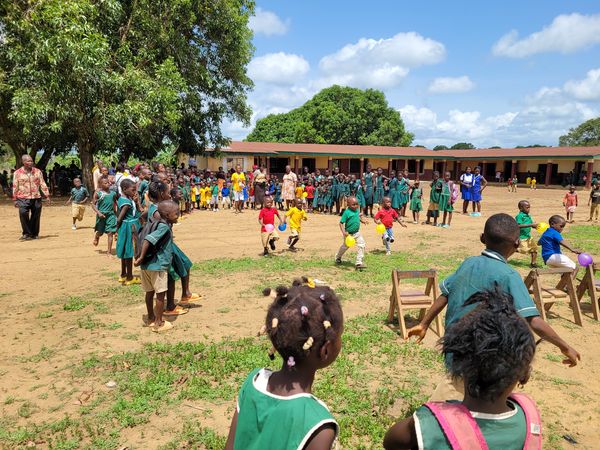
In Sierra Leone, the day was celebrated for the first time in 2024 across four districts in Sierra Leone: Port Loko, Bo, Pujehun, and Kailahun.
This would be the first time that local governments learned about the role of play labs in early learning. Children, parents, caregivers, school supervisors, and teachers from eight preschools joined in. They took part in games, talent shows, storytelling, and cultural parades. Play leaders highlighted the benefits of play, while sessions gave parents a platform to discuss and learn from each other.
The celebration was a unified call for schools to integrate play into education nationwide. “It was a milestone and only the beginning,” said Joseph Hakawa Kainesie, Ministry of Basic and Senior Education representative in the Bo district.
“Play is essential for a child’s development and learning. BRAC is currently the only organisation championing this cause in our communities, and we are grateful for their leadership,” he remarks.
This year, we will be continuing our advocacy across the four districts. The day is slated to highlight three priorities for child development: safe play spaces, evidence-based parenting support, and quality early childhood education – all three of which are central to BRAC’s work in early childhood development.
The Play Lab model: Child-centred and led by the community
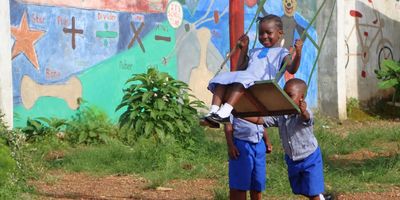
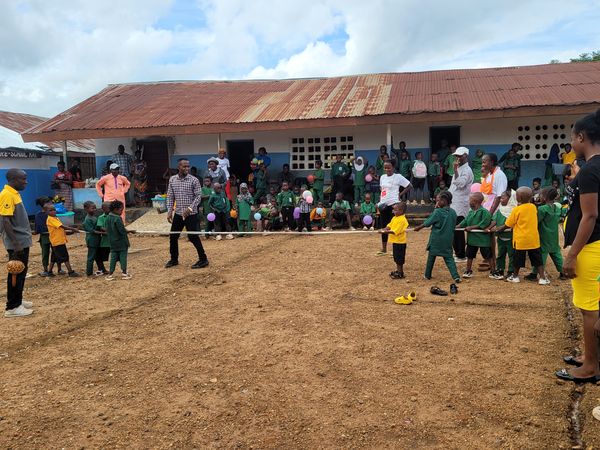
Across our play labs, children are not confined to their chairs and desks. Instead, they learn through movement, music, storytelling, and creativity, in environments designed for joyful learning. Lucy Koroma, a play leader in Bo says, “The results are visible: school attendance has risen, and parents who once viewed early education as optional now see it as essential.”
BRAC equips facilitators from local communities as play leaders to lead playful, child-centered activities that reflect local traditions and heritage.
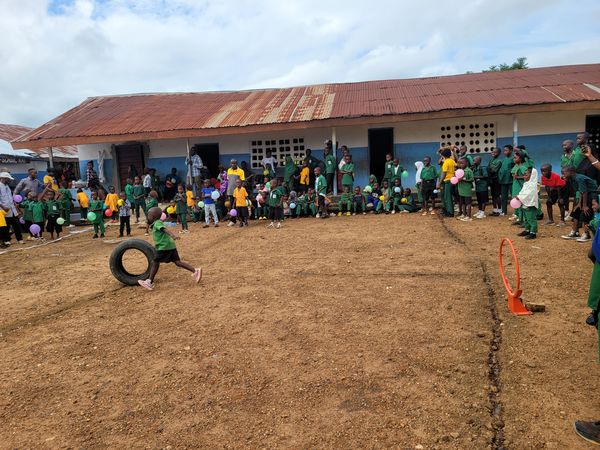
A key strength of the Play Lab model is community ownership. As the village chief of Bo, Desmond Tangie puts it, “The community contributes to this play lab because it is our responsibility. As long as our children are studying here, we are ready to contribute to its maintenance and decoration.”
This rings true for BRAC’s play labs across Asia and Africa. Play leaders, parents, and children gather at monthly workshops to make toys out of materials locally available. These include using recycled materials like plastic bottles and caps to make counting toys, bamboo and ropes to make swings, recycled fabrics to make dolls, and more.
This is a result of years of advocacy, sharing knowledge, and building trust with communities. At first, parents held the belief that children should learn exclusively through writing, reading, and structured classroom education. Through active community involvement, parent meeting, and demonstrations illustrating the ways in which play enhances children's communication skills, confidence, problem-solving abilities, and preparedness for school, parents started to recognise the importance of play-based education.
Fast forward to 2026. Scores of parents today join to keep play labs running by supplying local resources, volunteering in the upkeep of the spaces, and engaging with play leaders on their children’s progress.
In Sierra Leone, where nearly half the country is made up of children under 15, there is a growing need for safe, supportive environments to play and learn. This year’s theme, ‘Protect play, protect childhood,’ is a reminder that as safe play spaces across the world continue to shrink, children risk losing opportunities to learn, connect, and thrive. But a better future is entirely possible. And communities in Sierra Leone are building it.
By Abdulai Bunduka, Communications Manager, BRAC Sierra Leone; Seray Alpha Bangura, Project Coordinator, BRAC Sierra Leone; and Magdalene Yealie Kargbo, Behavioural Change Communications Officer, BRAC Sierra Leone.