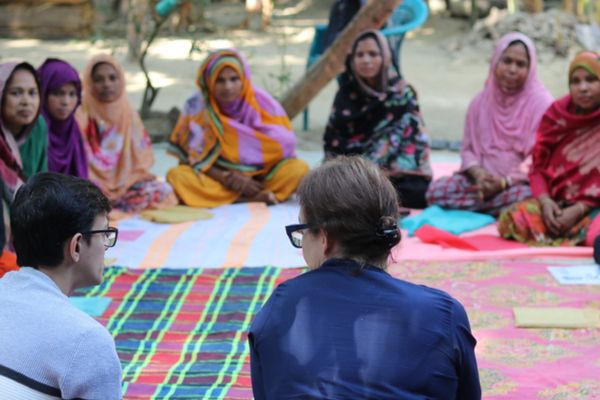
“There was a girl at our club. Timid. She would sit by the door or way at the back. Then one day, she started talking. Then arguing, dancing and laughing. Then planning her new business, and talking about her family. She had started making friends.”
I have heard this exact story, about a different girl, more times than I can count – from mentors in Sierra Leone, programme facilitators in Uganda, from people who have never met each other. It catches me off guard how consistently this pattern repeats across places with so little contact between them.
The moment a woman chooses to speak up and engage, is no small thing. It is about everything, and everyone, that made it possible. This International Youth Day, I want to reflect on what made it possible. This means talking about agency but it also means talking about something we are less comfortable naming: power.
Who holds it? Who doesn't. What it actually costs to give it up.
We’ve been talking about agency. We need to talk about power.
Our sector loves the word ‘agency’. We build it into theories of change, log frames and programme names. We are right to do so. After all, structural barriers such as discriminatory norms, unequal access to education, economic exclusion, and gender-based violence deny adolescent girls and young women the chance to fully exercise agency. So, we focus on agency. However, somewhere along the way, agency becomes synonymous with voice: speaking up, stepping forward, taking a seat at the table.
All of this matters, it matters deeply. Yet, agency and voice without the power to change anything is simply performance. Power is the promise that something actually changes because of what a young woman says. It’s not that she was heard, but that the people with the authority to act, did.
Recently, a young woman took the podium at an international event in Nairobi and put it plainly: Proximity to microphones does not equal meaningful engagement. The young woman was naming something most of us working in this sector already know but rarely say out loud: a girl can speak fluently in three languages at a high-level conference and still return home to a community where her decisions do not count, where her income is not hers to keep, and where her body is not fully her own.
Agency without redistribution of power does not guarantee real empowerment. It is merely a rehearsal and the development sector has been producing a lot of very polished rehearsals.
So who needs to cede power, and how?
This is the question the sector is most reluctant to reflect on. Because the answer is ‘us’. We design the programmes. We set the indicators, then ask young people to meet them. We decide what meaningful participation looks like, build it into a workshop agenda, photograph it, report on it, often while genuinely believing we are sharing power.
We are not.
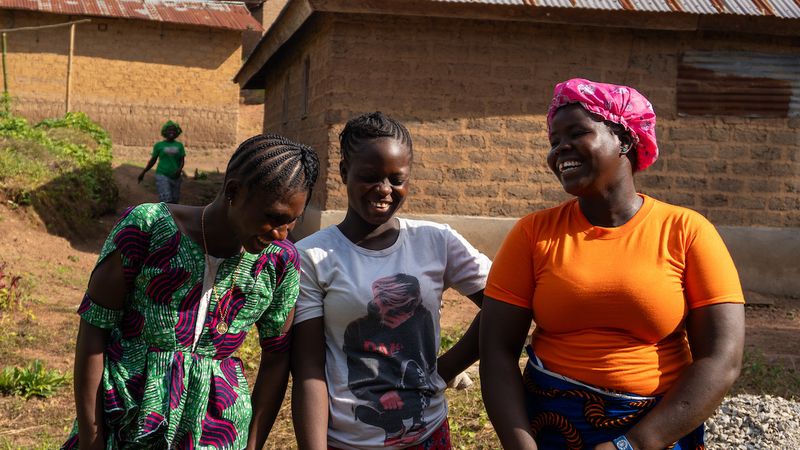
Photo: Shafayatul Amin Diganto, Liberia, 2026
Real power-sharing is local and relational. It means adolescent girls and young women have a seat at the table and get to decide what barriers they want to surmount first. It means a girl's mother is part of the conversation, not managed around it. It means communities shape the work from the beginning, not sign off on it at the end. This is slower, yes. But it's the only version that actually lasts. Power sharing isn't about elevating a handful of young leaders, but about creating equitable pathways so many more girls can step into leadership over time.
This requires something beyond just programme design. It requires examining what we need to let go of: decision-making authority, agenda-setting, the comfortable feeling of being the ones who know.
And the evidence suggests it works
The results are encouraging. Before joining the clubs, just over half of participants believed they could make a positive impact in their community. Afterward, more than 9 in 10 did. The same number also found it easier to access essential services, from healthcare to protection from gender-based violence. In Sierra Leone, first-year club attendees reported fewer cases of gender-based and other forms of violence in their communities. In Uganda, younger participants showed a stronger desire to remain in school. Meanwhile, over half the participants who joined the youth clubs started their own business and among those already running their businesses, 85.4% reported an improvement in their income.
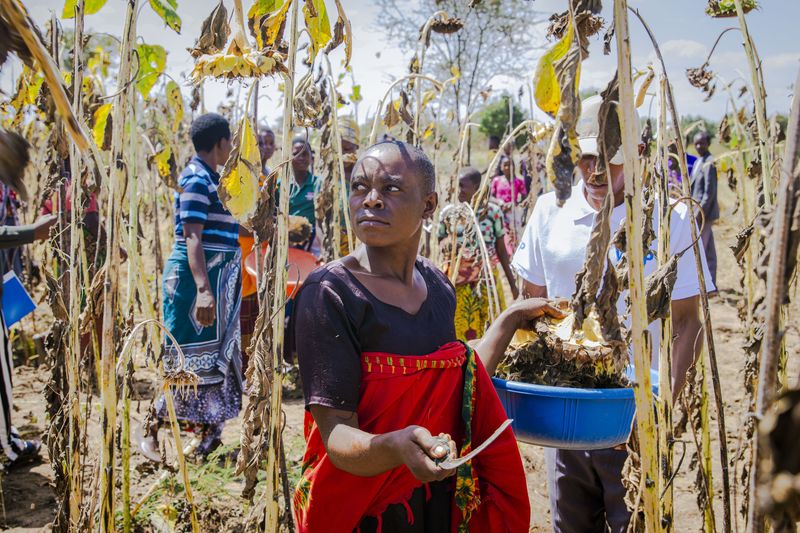
Photo: Daud Mohamed, Tanzania, 2026
Girls attend these clubs close to their homes, playing an active role in their communities as they learn, while village committees made up of their families and peers grow alongside them. They begin to understand what it takes for a girl to realise her full potential, and that her environment and circumstances matter as much as she does.
Agency is a muscle, not a lightswitch
I used to think of agency as something you either have or don't. Something a good programme could switch on. It does not work that way. Agency grows slowly, unevenly, only under the right conditions. It needs repeated small opportunities to feel safe, to decide, to see and enjoy the outcome. It needs someone who believes in her before she believes in herself.
I have watched this shift play out in our youth clubs across Africa. Girls move from saying nothing to creating space for others to speak. Young women negotiate with their families, extend credit to a friend, refuse something they were always told to accept. They do it without an audience, in ways that never make it into a report. That is agency and it begins long before anyone can see it.
This is the part that's hard to fund. Hard to photograph. Hard to put in a results framework. It's also the part doing the actual work. I say this as someone who has sat in rooms and done all of the above, filled the silence, redirected the conversation, quietly favoured the girl who was already close to ready. The road to tokenism is paved with good intentions and tight timelines.
The conditions for real transformation aren't abstract. They are local.
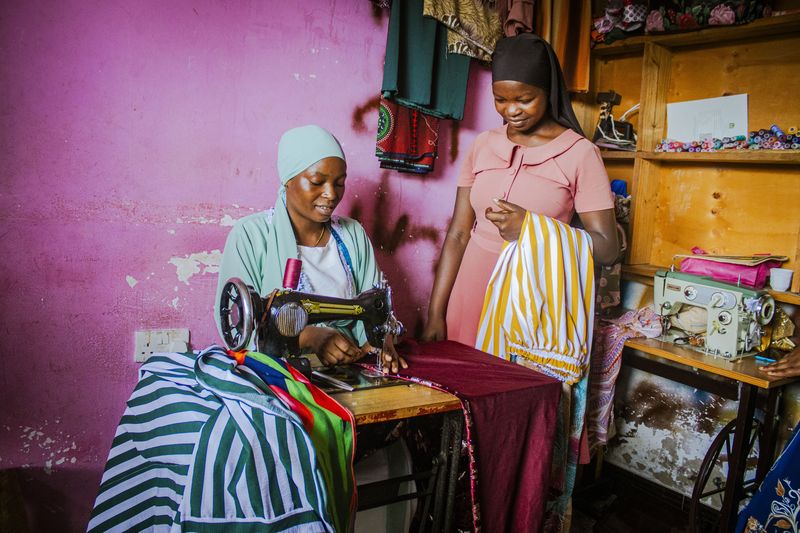
Photo: Daud Mohamed, Tanzania, 2026
We don’t work in communities or for them – we work as part of communities. Our strength and sustainability come from proximity and a shared reality. The relationships immediately around a young person, her family, her peers, her community are not the backdrop to her development. They are the ecosystem in which it happens, or does not. Even the most capable young woman is working within systems that will push her forward, hold her steady, or pull her back.
As I complete my first year working with BRAC's youth programme across Africa, I know our work is far from done. I arrived knowing the frameworks, the language, the Theory of Change. What the year gave me is a deeper and more grounded belief that we are pointed in the right direction. The destination is clear and so is the guidance on how to get there. As founder of BRAC Sir Fazle Hasan Abed put it, “Poor people are poor because they are powerless. We must organise people for power.”
Written by: Emma Bonar, Associate Director, Youth Empowerment, BRAC International