‘Every ceiling, when reached, becomes a floor’ Aldous Huxley
BRAC’s Kumar Das, Himanshu Pahwa and Kshovan Guha argue that chronic poverty depletes imagination as much as resources, and that BRAC’s Graduation programmes have been sequencing things backwards, handing over assets before households have a chance to articulate what they actually want. Their fix is a living “Aspiration Booklet,” which captures the households evolving hopes for the future. It’s a small idea with real implications for how we measure programme success.
The woman who wanted to buy soap: During a field visit to one of the states implementing the Samaveshi Aajeevika Yojana (SAY) programme, we met Radhika, a Malayali tribal woman. In the course of our conversation, we asked about her aspirations for the future. After a brief pause, she replied, “I want to buy soap.”
At first, the response seemed unexpectedly modest. In many development programmes, aspirations are often associated with starting a business, expanding livelihoods, building a house, or increasing household income. Against these expectations, buying a bar of soap might appear to reflect limited ambition.
Yet the conversation prompted us to pause and reconsider our own assumptions about aspiration. For Radhika, soap was not merely a household item. It represents dignity, self-worth, wellbeing, and a life that was marginally better than her present circumstances. The fact that her response reflected the “ceiling” of what she could picture for herself tells us something important: extreme vulnerability doesn’t just deplete resources. For households experiencing multidimensional poverty, the first barrier is often not the absence of resources but the absence of imagination of a different future.
Radhika’s response became a powerful reminder that aspirations should never be judged by their scale. This is the principle behind BRAC’s rethink of its coaching model, and we think development and behaviour-change people outside BRAC may be interested.
Aspiration isn’t a personality trait; it’s a resource that gets rationed: Poverty constrains not only economic opportunities but also people’s capacity to aspire. As Appadurai (2004) argues, aspirations are socially embedded and shaped by the opportunities and possibilities individuals perceive within their environment. Consequently, sustainable poverty reduction requires more than providing livelihoods, assets, or financial services; it also requires building the confidence and hope that enable households to pursue these opportunities. Where aspirations remain low, households are less likely to invest, innovate, or take calculated risks, limiting the long-term impact of programme interventions.
Field experience from the SAY Programme reinforces this understanding. Many households’ experiencing extreme vulnerabilities gradually accept deprivation as permanent, narrowing their expectations and focusing solely on day-to-day survival.
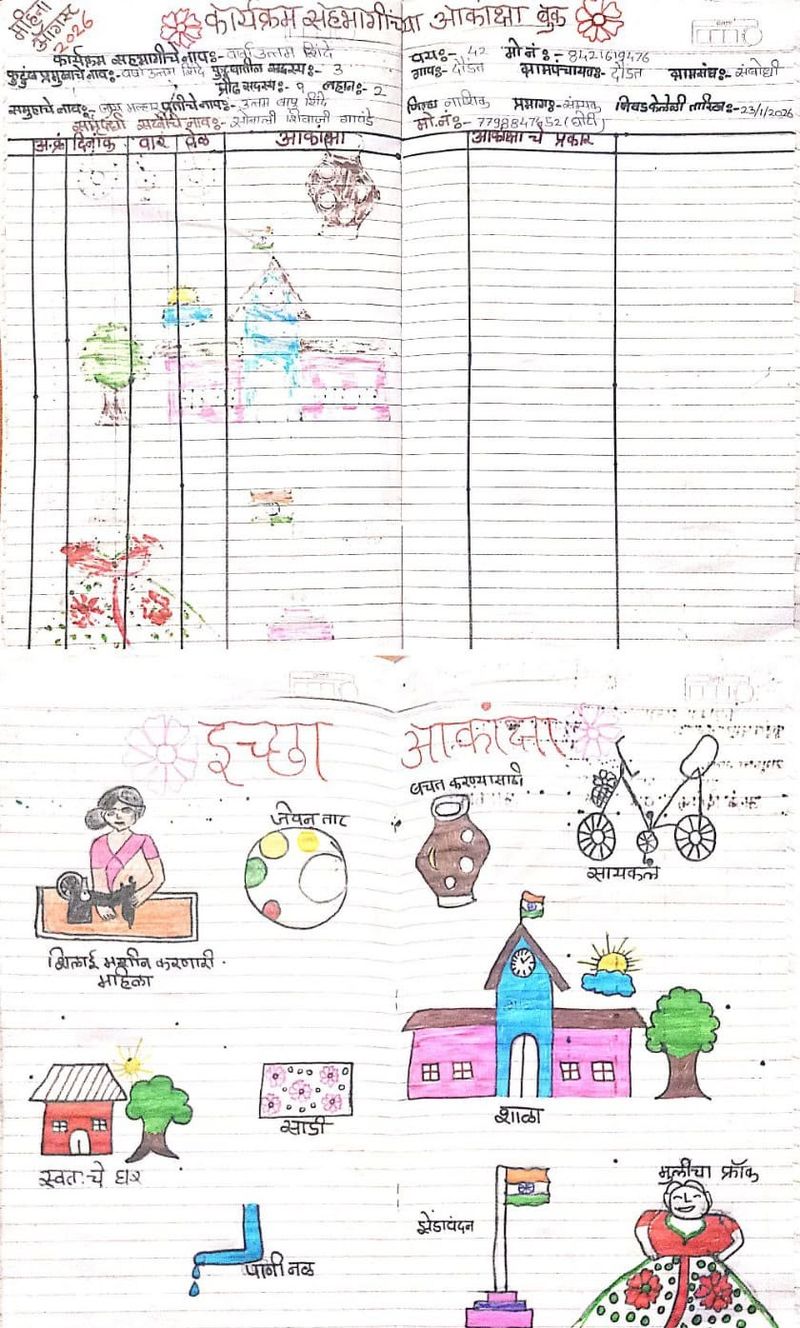
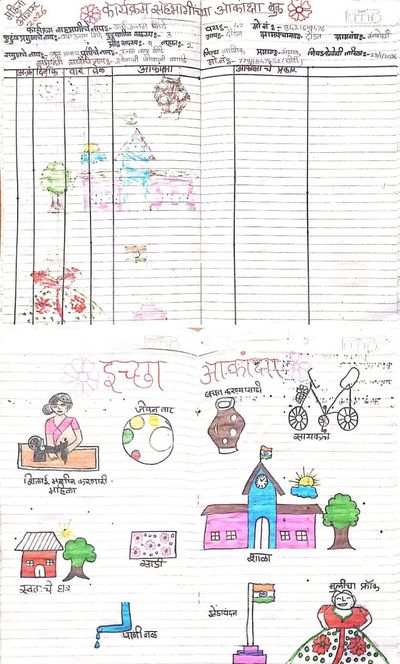
Caption for image above: An Aspiration Booklet completed by a SAY participant. Through drawings and simple narratives, the booklet captures personal dreams, from a better home and children’s education to dignified livelihoods, reflecting how aspiration becomes the starting point of the Graduation journey.
Recognising this, SAY places aspiration mapping at the centre of its Graduation approach. Rather than beginning with a discussion of household deficits, the Aspiration Tool initiates a structured conversation about the future. It encourages households to reflect on their strengths, articulate what they hope to achieve, and identify realistic pathways towards those goals. That reframing matters because it flips the standard sequencing of livelihoods programming. The conventional model hands participants productive assets, financial services, and a coaching curriculum, and assumes motivation will follow provision. BRAC’s experience on the ground suggests the opposite causal order: without some prior capacity to imagine a different future, households won’t take the risk the assets require them to take.
The Booklet as a living document, not a Tool: The Aspiration Booklet gives households ownership of their own journey. By recording their aspirations in their own words, participants move from responding to programme questions to defining their own goals, fostering greater ownership, agency, and motivation. Coaches then support households in translating these aspirations into realistic and achievable pathways through programme interventions and convergence opportunities. The booklet is not a “tool” in the programme sense; a form to be filled out once and filed away. It is a living document, something the household returns to, adds to, and revises over time, in their own language, at their own pace.
While conventional poverty programmes begin by identifying household deficits, the Aspiration Tool starts with a different question: “What kind of future do you want to build?”. This simple shift changes the focus from what household’s lack to what they aspire to achieve, recognising their capabilities, aspirations, and potential rather than defining them by their deprivation.
The Aspiration Booklet creates space for households to reflect on what truly matters to them, helping restore hope and confidence before coaching begins. By placing household aspirations at the centre of programme engagement, the relationship between the programme and participants also changes. Coaches become facilitators who support households in achieving self-defined goals, rather than delivering predetermined solutions, while households become active decision-makers rather than passive programme participants.
Ceilings become floors: The defining strength of the Aspiration Tool is that it treats aspirations as dynamic rather than static. It is not intended to capture a household’s aspirations at a single point in time; rather, it supports a continuous process of growth. Every achievement, whether securing regular meals or establishing a livelihood creates the confidence and capability to pursue the next aspiration. It changes what households believe is possible. What once appeared to be an unreachable ceiling becomes the new floor from which the next aspiration emerges. This principle mirrors the core philosophy of the Graduation approach. Graduation is not a one-time event or the achievement of a fixed set of indicators. It is a continuous process through which households progressively expand their capabilities, opportunities, resilience, and aspirations.
Success builds confidence, confidence expands aspiration, and expanded aspiration drives further progress. This understanding has important implications for programme implementation.
The Aspiration Tool should not be treated as a one-time planning exercise completed during enrolment. Instead, aspirations should be revisited throughout the coaching journey, allowing households to reflect on their progress, redefine their goals, and build on each success. Coaching therefore becomes a process of accompanying households as their aspirations evolve rather than simply supporting the achievement of predetermined targets.
It also has implications for how programmes define success. Measuring the number of productive assets transferred or households meeting graduation criteria captures important programme outputs, but it does not fully reflect whether transformation has become self-sustaining. The more meaningful measure of success is whether households continue to set progressively higher aspirations, make independent decisions, and pursue new opportunities even after programme support has ended. When each achievement becomes the foundation for the next ambition, aspiration ceases to be a programme activity, it becomes the engine of sustained economic and social transformation.
Why this matters beyond BRAC: Recognising aspiration as the engine of sustainable Graduation has three important implications for the SAY Programme.
- First, aspiration should not be treated as a one-time enrolment exercise. It should guide the coaching process, with aspirations reviewed and refined as households achieve milestones and set new goals.
- Second, livelihood planning should be driven by household aspirations, strengths, and local opportunities rather than predetermined programme options. Coaches should help households translate their aspirations into realistic and achievable pathways.
- Third, programme success should be measured not only by graduation indicators or asset transfers, but also by whether households demonstrate greater confidence, stronger agency, independent decision-making, and continue to set progressively higher aspirations beyond the programme period.
For a more information, please visit our downloadable PDF on the topic. To read the full blog on the original publication site, please visit this link.