BRAC regularly documents its biggest failures. It’s not easy to admit when a project doesn’t work as planned but we do it anyway. When something fails, we take an honest look at the programmes that did not go as planned. We believe it’s one of the best ways to learn, adapt, and solve the world’s biggest problems. That commitment is backed by a relentless focus on results, and rigorous learning.
This report looks at four stories of failure, the lessons we learned, and what we did with them. Download here:
Failure Report 2026
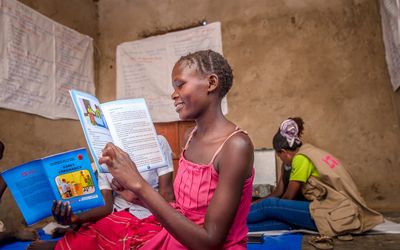
The Empowerment and Livelihoods for Adolescents (ELA) model was launched in Uganda in 2006. Girls and young women met in safe spaces to learn life skills and financial literacy from a ‘near peer’ mentor.
The programme demonstrated significant early impact. A major independent study found that it raised incomes and cut teen pregnancy rates across entire villages.
So BRAC scaled. Over 1,800 additional clubs were formed across five African countries, reaching 80,000 people. But a 2019 internal study found that more than half of a sample of supposedly active clubs effectively did not exist. Club sessions were not taking place five days a week as intended. The programme was meant for girls who were out of school, but girls already in school were participating.
When staff checked in on clubs unannounced, they were shocked. More than half of the clubs had no mentor or members. These ‘ghost clubs’ existed on paper only.
BRAC eventually rebuilt the ELA model from the ground up. After consulting parents, communities, and the girls and young women, staff refreshed the curriculum and introduced a time-bound cohort structure with a clear ‘graduation’ point. The model now has age-segregated tracks: one for school-going girls (10–14) focused on retention, and one for out-of-school young women (15–24) focused on livelihoods and economic empowerment. Club schedules were revised too: the original five-day model proved too demanding, so in-school girls moved to twice-weekly sessions and out-of-school girls (often working or running small businesses) to three days a week. Programme officers recorded mentor-led sessions for team review, helping identify what to standardise versus adapt, and BRAC established a layered support-supervision system where each level monitors the next.
BRAC concluded that it had relied too heavily on early evidence of success while failing to sufficiently refresh, contextualise and monitor the model as it scaled. Lessons from the subsequent redesign now inform a programme aiming to reach 2 million adolescent girls and young women across seven African countries by 2033.
The Mastercard Foundation Accelerating Impact for Young Women in Partnership with BRAC programme (AIM) programme builds on BRAC’s proven, evidence-based approaches in youth empowerment, microfinance, agriculture, and skills development to help girls and young women improve their lives and livelihoods.
Lesson learned: Even a programme backed by research can quietly get off track without close monitoring. Success once, or in one location, does not guarantee success forever or elsewhere – programmes must be adapted to local context, and re-adapted as that context changes.
This is one of four stories in BRAC's sixth annual Failure Report.