Access to responsible financial services helps people living in poverty access savings, loans, and insurance products as they work to build assets and invest in their livelihoods and their families’ futures. This access provides a critical cushion when they experience an irregular harvest, an unexpected medical bill, or a slow month for a small shop. It means they can consistently access food, and accumulate savings to cope with shocks and emergencies. It empowers them to invest in their family’s future.
Poverty is complex and dynamic, and tackling it requires a holistic approach. Microfinance, responsibly delivered, is one vital tool in the toolbox, and a core part of BRAC’s approach to fighting poverty.
Alongside education, healthcare, and other solutions, we’ve worked to deliver inclusive microfinance in the hardest-to-reach places for more than 50 years. The 2026 60 Decibels Microfinance Index includes surveys from tens of thousands of clients across the global microfinance industry, including BRAC clients. The findings are clear: when delivered responsibly, microfinance boosts resilience and improves lives.
We looked at how BRAC’s work stacks up against the industry, drawing on client interviews from BRAC International Microfinance (with operations in Rwanda, Uganda, Tanzania, Liberia, Sierra Leone, Ghana, and Myanmar) and BRAC Microfinance in Bangladesh.
Since 2019, we’ve talked with over 20,000 BRAC microfinance clients, the majority of whom are women, asking, “How is your life different after working with BRAC?” Benchmarked against the 60 Decibels index, BRAC clients outperform peers across multiple metrics. Discover our learnings from seven years of asking this question to clients around the world.
1. Clients are building real financial resilience
When microfinance is delivered responsibly, it can help individuals and families grow their income and build up savings. That way, when a health crisis or disaster hits, they won’t need to sell assets or take on additional loans to cover the costs. Instead, they can rely on their own savings.
So we ask BRAC clients a direct question: before you started working with BRAC, if you had faced a large expense related to the health of your family, what would have been your primary option for obtaining this money?
Across five of seven countries where BRAC International Microfinance (BI MF) conducted the survey, clients say they would use their own savings after working with BRAC, suggesting higher financial resilience.
In Liberia's 2025 survey, only 21% of clients said they would have relied on savings in an emergency before their time with BRAC. After working with BRAC, 93% would do so. This represents a positive shift towards using savings as a more resilient source of funds. A similar trend is seen in Tanzania, where the share rose from 28% to 70%, and in Ghana, where it rose from 35% to 80%.
In Bangladesh, where most clients have several lenders to choose from, the shift is just as real. Before working with BRAC, 72% of clients said they would have borrowed to cover a large health expense; today 60% say they would. 70% say BRAC has improved their ability to deal with an unexpected expense, rising to 81% among clients who have been with BRAC longest.
The trend is positive: fewer people leaning on debt when a crisis hits.

2. For many clients, we are the first door that opens and often the best option
Across BI MF countries, 69% of clients reported never having access to a loan like the ones BRAC offers, compared to an industry benchmark of 58%. 38% say they would find it ‘very difficult’ to find any good alternative, against an industry benchmark of 18%.
In Liberia, 86% of clients report not having prior access to a loan like BRAC’s and 78% of clients say it would be difficult to find an alternative. This places BRAC Liberia within the top 20% of performers in the 60dB FI Lending Benchmark for Africa.
Bangladesh is a highly competitive, credit-saturated market. Even so, BRAC is increasingly the first door for new borrowers: 41% of clients surveyed in 2025 had never had a loan like BRAC's before, up from 26% in 2024.
Only 6% of borrowers report experiencing a challenge with BRAC Bangladesh in 2025, compared to 20% in the 60dB global benchmark and 96% say they will continue working with BRAC next year. One client explains why she'd recommend BRAC over other lenders: "They provide the loan quickly. The loan amount is also enough. We have a BRAC office nearby, so we can visit anytime."
Where the market is sparse, BRAC is often the only formal option. Where the market is more crowded, we're often still the first door people walk through.
3. What comes with the loan matters as much as the loan itself
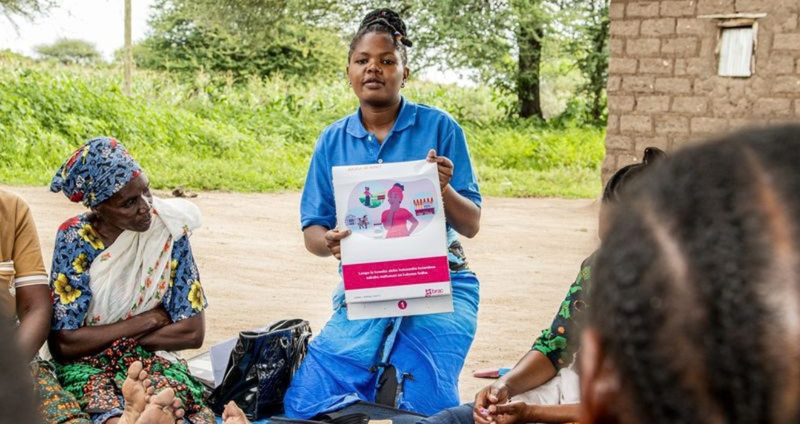
In Bangladesh, one in three of BRAC's borrowers also used another BRAC service in the past six months, most often savings (29%) and insurance (5%). New clients are the most likely to save with BRAC (42%), from their first loan cycle. These can make the experience more valuable and lead to better business and social outcomes than the loan on its own.
In Myanmar, Uganda, Rwanda, Tanzania, and Liberia, clients who received financial, digital and life skills training (FLT) from BRAC reported that their ability to manage finances has “very much improved”, compared to those who did not.
Across BI MF, amongst clients who participated in financial, digital and life skills training alongside their loan, 47% report a “very much improved” quality of life, compared to 38% of those who received credit alone. Their overall social outcomes score (a combined measure of quality of life, financial resilience, self-employment and livelihood opportunities, women’s economic empowerment, and household welfare) came in six points higher, too.
Credit helps. But credit paired with training, insurance, and other forms of support helps even more.
4. The gains show up at home before they show up in the business
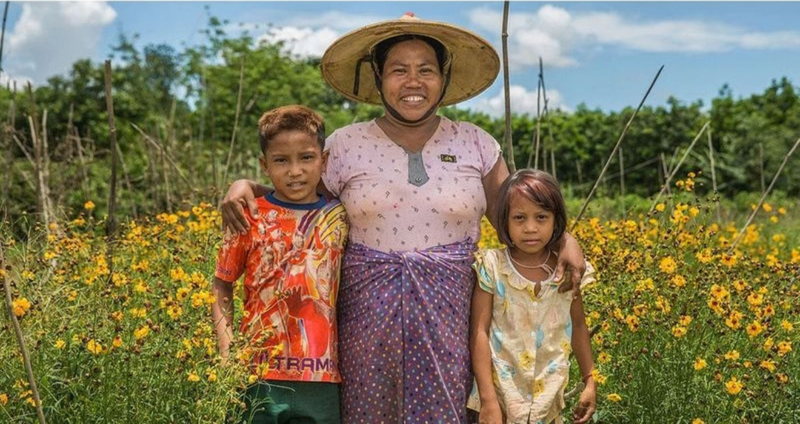
Ask clients what has improved in their lives, and most lead with their kids. Across BI MF, 91% of clients say they’re now spending more money on their children’s education after receiving a loan from BRAC.
In Bangladesh, 84% of clients report an improved quality of life, and 87% say BRAC has improved their ability to cover household expenses. 68% report a better ability to fund home improvements, and 57% a better ability to pay for healthcare - a result in the top 40% of 60 Decibels' Asia lending peers.
In Rwanda, more than half reported increased income and ability to afford household bills. In Ghana, Tanzania, and Uganda clients report significant improvements in ability to pay for healthcare visits - 94%, 90%, and 86% respectively, placing the institutions at the top 20% of the 60dB benchmarks for Africa.
Taking out a loan or opening a savings account might start as a business or personal goal. But families experience some of the earliest and biggest benefits.
5. Impact deepens the longer a client stays
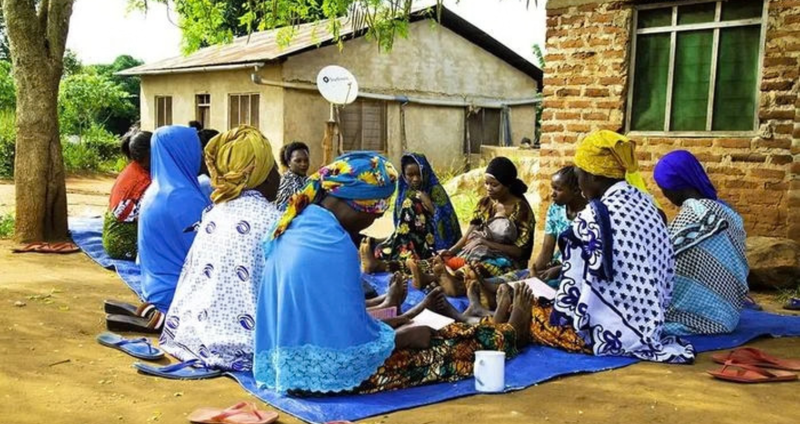
BI MF conducted surveys on tenured clients - those who have partnered with us for three years or longer - in six countries. Tenured clients report deep improvements across several impact metrics compared to new clients. That includes an improved quality of life at more than one and a half times the rate of new clients: 56%, compared to 36%. Business income tells a similar story: 56% of tenured clients report a “very much increased” income versus 38% of new clients.
BRAC Bangladesh shows a similar pattern: tenured clients are more likely than new clients to report their quality of life has improved (90% vs 81%). They also report higher business income (93% vs. 84%), and a reduction in financial stress (down to 39% vs 70%). Women’s economic empowerment is 70% among tenured clients, up from 55% among new clients.
The lesson? A loan or savings account doesn’t change a life overnight. Impact takes time and staying in a trusted relationship compounds the benefits year after year.
How did we get this data?
As a learning organisation, listening to the clients we serve has always been central to BRAC’s mission. Since 2019, we have partnered with 60 Decibels, an independent impact measurement company, to learn directly from clients.
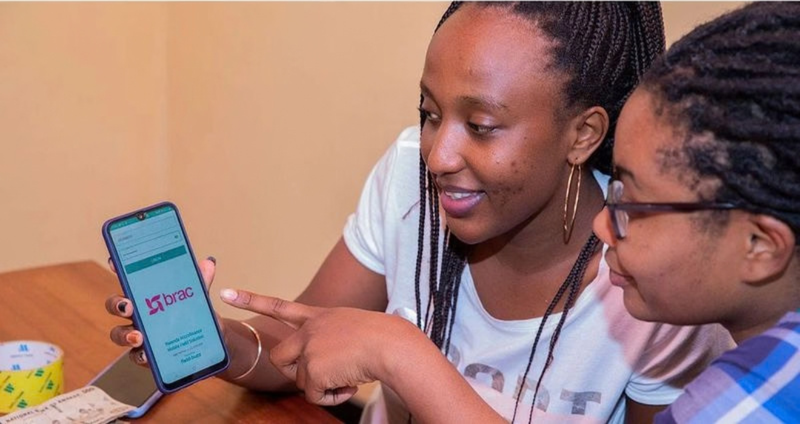
60 Decibels independently reaches out to microfinance clients using a Lean Data approach. This involves short, phone-based surveys with clients to understand who they are, what their lived experiences have been, and the impact an intervention has had. The responses help us to learn directly from our clients, address challenges, and continuously improve client outcomes and impact.
In 2021, BI MF published its first impact report, “Demonstrating the impact of client-centric microfinance,” that presents BI MF’s approach to measurement and management of client-level outcomes and impact.
Investing in the potential of women
Poverty is too complex for any one tool to solve on its own, and microfinance alone is not a silver bullet. Solutions must be holistic and part of a multifaceted approach.
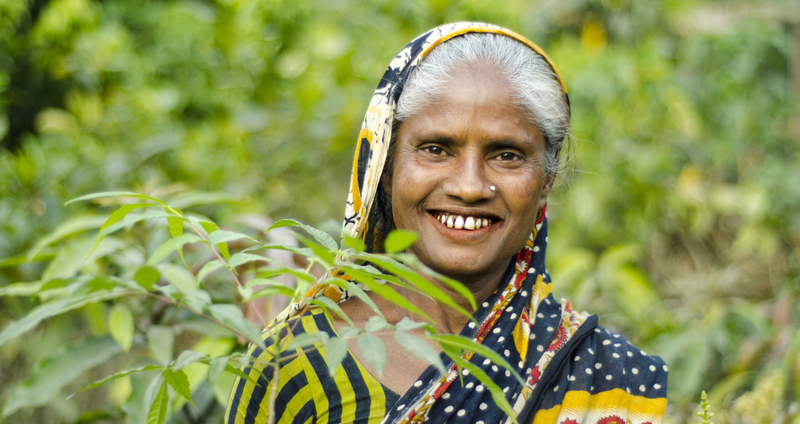
For over 50 years BRAC has continued to expand the reach of microfinance to include those typically excluded from financial services - especially women. Bringing more people living in poverty into the formal financial system equips them to build stronger futures on their own terms.
For funders and partners deciding where to invest capital and policymakers who can make systems-level change, the evidence is consistent across the countries where BRAC provides microfinance services: responsible finance helps women grow their income, weather a crisis, and invest in their children and household. Clients who have been with us longest report the deepest improvements. That is why we will never stop investing in the potential of women.
Want to keep learning? Download the 2026 60 Decibels Microfinance Index to explore the sector’s evidence about responsible microfinance worldwide. You can also find out more about BRAC’s inclusive finance approach in Bangladesh and around the world.
Written by Tahjib Shamsuddin, Senior Manager, BRAC International Microfinance and Sarah Allen, Communications Manager, BRAC USA.