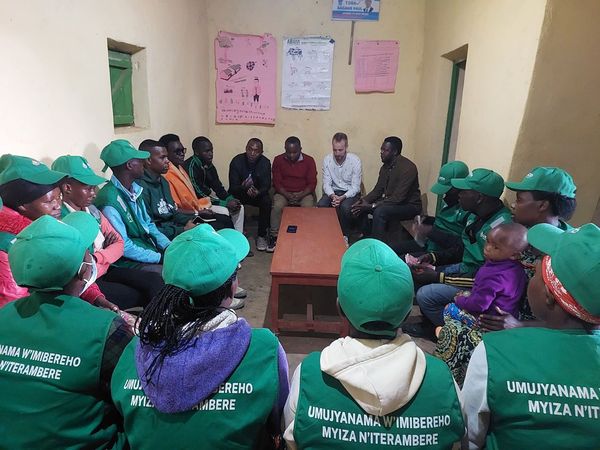
The Graduation approach is widely recognised as one of the most effective strategies for breaking the cycle of extreme poverty. But as governments around the world scale this approach, one component consistently stands out as both critical and challenging: coaching.
When tasked with designing a coaching strategy, governments often perceive it as too complex and resource-intensive. This impression usually comes from early NGO-led Graduation programmes, where coaches met individually with participants almost every week and personally delivered a wide range of trainings and support. While impactful, this model can—in certain contexts—be difficult to replicate in large-scale, government-led programmes.
The good news is that coaching in Graduation has evolved. Governments and organisations that have adopted the approach at scale have tested and proven leaner, more scalable models that respond to common resource constraints, whether human, financial, or logistical. These models use practical adaptations such as:
- Group sessions instead of frequent one-on-one meetings
- Lower coaching frequency, tailored to programme stages
- Digital tools to extend the reach and effectiveness of coaching
- Convergent models where coaching responsibilities are shared across partners
These adaptations show that governments can achieve strong outcomes without overburdening the system.
At the same time, there is a cautionary note: In trying to simplify the Graduation approach to fit government systems, some programmes risk oversimplifying. Coaching isn’t just about briefly training staff and asking them to provide advice on demand. Effective coaching requires structure, clarity of roles, and intentional design. Without these, the programme risks losing the essence of what makes Graduation successful, as shown by evidence.
To support decision-makers and programme designers in this process, BRAC has developed a Coaching Framework. This tool helps governments and practitioners understand the range of options available when designing a coaching strategy, grounded in evidence and practical experience.
We reviewed the available research on what works (and what doesn’t) in coaching and translated it into actionable insights for programme designers. The framework organises evidence and practical insights into seven key variables that shape any coaching strategy:
- Size of in-person coaching sessions
- Frequency of in-person contact
- Caseload (number of participants per coach)
- Staffing options
- Type of contact
- Coaching support tools, including digital tools
- Coaching tasks
For each variable, we present the different options available and the evidence and implications behind them. The idea is not to prescribe a one-size-fits-all model, but to help programmes pick and choose the combinations that best fit their local context. Factors such as programme objectives, participant needs, budget, workforce, infrastructure, and partnerships all matter when making these design choices.
Some of the key takeaways derived from our review of the literature and practical experience are:
- Quality over quantity: Regular and reliable coaching matters more than frequency or intensity;
- Standardised guidance for coaches is critical to increase the quality of coaching;
- Group coaching is cost-effective and when implemented well and at the right stage of the programme it does not affect quality;
- Technology can be used to enhance the quality of coaching and reduce costs;
- Modalities of coaching can differ during the programme cycle and for different participants to align with programme objectives and individual participants’ experiences;
- Match the task of coaches to available capacity and draw in other experts if needed.
Designing a coaching strategy requires careful choices and structured planning to ensure coaches can do their jobs effectively and programmes can achieve their goals. But it doesn’t have to be overly complex or resource-intensive.
When grounded in evidence and tailored to local realities, coaching can be leaner, scalable, and still impactful. This is good news for all of us seeking to implement these programmes at scale.