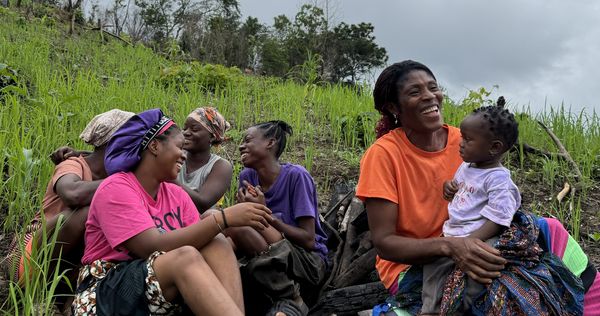
Dede grew up on a farm in Lofa County, Liberia. Her childhood was mostly spent doing household chores and following her mother to the fields, planting rice, cassava, and vegetables by hand. What they grew fed the family. If there was extra, her mother sold it for a small amount at the market.
Dede’s childhood is reminiscent of many other girls' experiencing poverty in Liberia. They are compelled to grow up before they are ready, taking on responsibility early, often before they can even imagine other possibilities.
Liberia, Dede’s home, ranks among the lowest in the world, in GDP per capita. According to Liberia's National Development Plan (2025-2029) about 87% of the country’s population are in the informal sector. For women and girls living in poverty, the effects are intensified. Fewer than one in four women complete secondary school. Many girls leave school because of early pregnancy, early marriage, harassment, or financial pressure. Nearly a quarter of women aged 20–24 in Liberia are married before age 18, and access to modern family planning remains limited.
These challenges rarely affect only one generation. They repeat across families. Early marriage and childbearing hinders girls' education and reduces their long-term earning potential.
It was the same for Dede. She became a mother young and relied on farming to support her children. For years, she depended on one harvest of rice and cassava each year. Between harvests, income was unpredictable. When school fees were due, she made palm oil from wild palm trees to earn extra money.
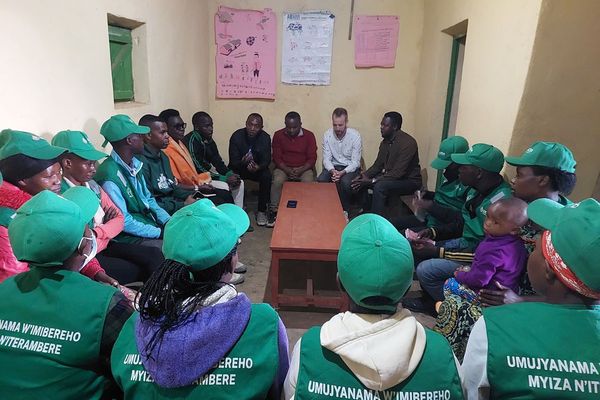
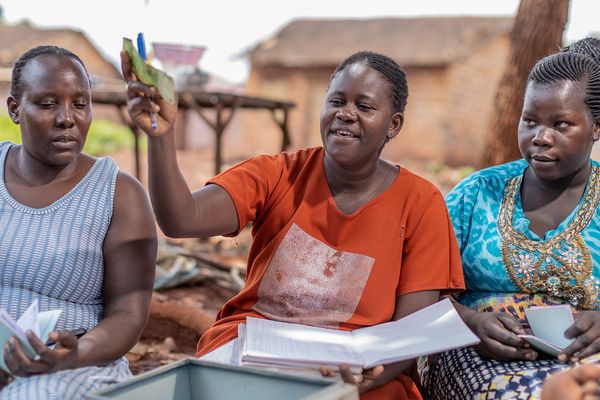
When Dede found out about a youth club in her area where women get together to learn skills and support one another, to start and scale their own businesses, she was curious to find out what it was about.
She heard about the club through women in her community and decided to attend. There, she learned basic skills such as saving, planning her farming seasons, and managing small earnings. The group setting helped her build confidence to make decisions about her work and household.
These clubs show how safe spaces can support women to build skills, start small businesses, and pass knowledge to the next generation.
Once it came to deciding what she would do for her future, Dede chose agriculture because it was familiar. She received seeds, tools, and hands-on training. One of the most important lessons was learning how to farm in multiple seasons. Instead of waiting months between harvests, she began planting rice, maize, watermelon, cabbage, and okra throughout the year.
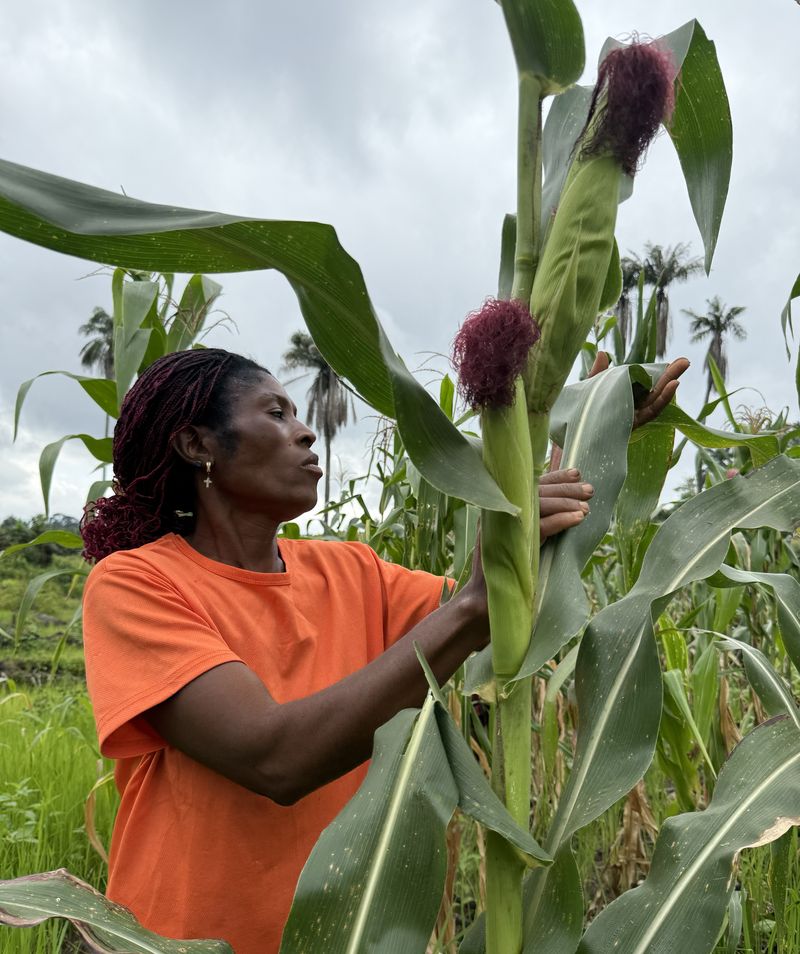
Dede observing her maize harvest in her farm. Photo: Shituma Tajrin, 2025.
“Before this, I depended on one harvest,” she says. “Now there is always something growing.”
She also received financial literacy training, helping her save, plan, and make decisions with more confidence.
Beyond livelihoods, the club also included life skills and empowerment sessions. This was new for Dede. She learned about family planning, healthy relationships, and personal wellbeing.
“If I had known about birth spacing before, I would have planned my family differently,” she says. “Now I teach my daughters so they don’t repeat my struggles.”
That knowledge is already shaping the next generation.
Dede’s eldest daughter also became a mother young. However, Dede is determined her daughter will not go through the same as she did. She takes care of her grandchild while her eldest daughter has returned to school. Dede says her daughter now wants to become a doctor.
Today, Dede speaks candidly with her daughters about staying in school, family planning, and making informed choices. These conversations represent a shift from the silence and limited options she experienced growing up.
Dede’s story is just one example of what happens when women gain access to skills, information, and support. The impact may start small, but it has long-term implications.
The Mastercard Foundation Accelerating Impact for Young Women in Partnership with BRAC (AIM) programme is an initiative designed to equip 1.2 million adolescent girls and young women, with age-appropriate entrepreneurship, employability, and life-skills training, as well as the tools to start and scale their own businesses. The five-year programme applies BRAC’s globally recognised, evidence-based approaches which enable individuals to improve their own lives and livelihoods. In Liberia, the programme is equipping 161,500 adolescent girls and young women with the skills needed to launch their own businesses.
Story by: Noushin Tarannum Neha, Communications Officer and Shituma Tajrin, Senior Manager, Programme Communications, BRAC International
Edited by: Abida Rahman Chowdhury, Senior Manager, Thought Leadership and Content, BRAC International
Featured
Mastercard Foundation and BRAC expand landmark partnership to unlock pathways to dignified and fulfilling work for 2 million young women across Africa
A three-point plan to tap into one of the world’s largest growth opportunities – women!