The year is 2025. More women than ever in history are now educated, more visible in society, occupying leadership positions, and breaking the glass ceiling every day. Globally, the enrollment rates of boys and girls in both primary and secondary education are nearly equal. The representation of women in most national parliaments has nearly tripled since the late 1990s. In fact, many would say, these are historically low barriers compared to those faced by women just a generation back. These are all true — that is, if you decide to only look at the big picture. Zoom in, and we start to see the failures and the work that remains to be done.
In the Global South, where most of the world’s population lives, an overwhelming majority of women and girls simply do not have the safety nets and the know-how to cope with, let alone report the harm they experienced.
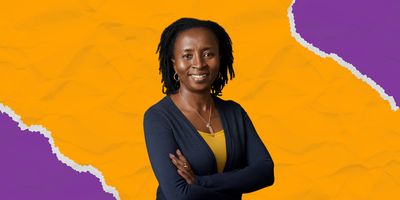
For this 16 Days of Activism, we sat down with Anne Mutta, regional director, Africa, to shed light on the systems that keep girls and women unsafe, and the future she envisions.
Q: Why is it so important to highlight women’s empowerment during the 16 Days of Activism?
Anne: The gender-based violence we spotlight during the 16 Days of Activism campaign intersects with poverty, inequality, and agency. You cannot have meaningful development without safety. For example, you cannot engage in meaningful livelihood when your life and welfare are under threat, and you cannot self-actualise if you are constantly having to hide or minimise yourself because you fear how the world – or the people around you – perceives and treats you because of your gender. Economic growth cannot happen if women are constantly under threat at home and in their communities.
Being silent on gender-based violence is being complicit. If we stay silent, we are not protecting survivors. We speak up because gender-based violence is wrong on so many levels, and also because it is deeply ingrained in the broader narrative of poverty.
Q: You have extensive experience designing and implementing inclusive solutions that elevate women across diverse sectors. Could you share a bit about your background and your broader vision for supporting girls and women in African countries?
Anne: I grew up on Kenya's coast, which has lower socio-economic standards than other parts of Kenya, despite being a well-resourced region. My childhood memory is of women working hard to provide for their families. Knowing what I know now, these were strong women. They were strong in that they simply did what needed to be done – engaged in microtrades when they could, went long distances to fetch water, cleaned homes, supervised their children in and out of school, and cared for their family daily. What struck me, though, was that very few of them could focus on their own growth. Their strength lay in their need to survive in a system that did not have them in mind. And as I have continued to work in development, I’ve seen that when women gain a livelihood, and their lives change, they quite literally ‘become louder and visible’ because they have a source of income. Without income, you are muted – you do not enter the spaces where decisions are made.
I want to see more women being heard, being able to make informed decisions about their rights, and participating in the spaces where decisions affecting their well-being are made. At the end of the day, it is about voice, agency, and choice.
Q: What are the most pressing challenges that girls and women face today — particularly in relation to health, education, employment, and livelihoods?
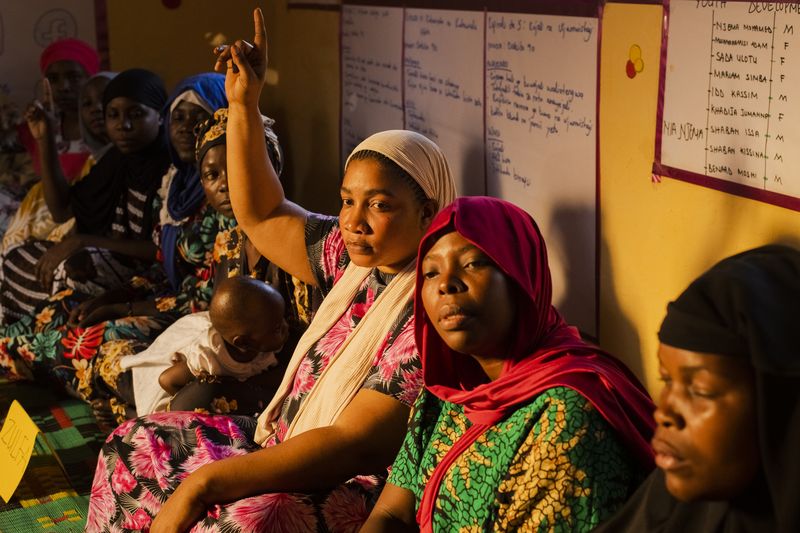
Anne: Especially in the African context, many girls and young women suffer from limited access to education, services, and livelihoods – challenges that are often made worse by social norms dictating how they should behave at home and in society. I once read that norms clip wings long before poverty does. For a lot of girls and women, our natural biological functions are treated as taboo, and we grow up with assumptions that are shaped by others' beliefs. Shifting these norms and taboos requires intensive community dialogue.
We often see high numbers of girls enrolled in primary school. But as they grow older and households face difficult decisions on income choices, there is an almost unspoken assumption that boys will continue with their education while girls stay home to care for others. In many African households, there is still a belief that girls should focus on getting married, while boys are expected to become providers.
Q: How do factors such as poverty, climate change, and gender-based violence intersect to affect the challenges faced by girls and women?
Anne: Most rural livelihoods in Africa are based on agriculture, making many households highly vulnerable to climate change shocks. The changing climate destabilises rural communities because if the rains do not come, they cannot plant; if they cannot plant, they have no food or income. And without food or income, poverty deepens.
This daily struggle for survival has wide-ranging ramifications. When there is a lack of food or loss of income, and someone feels they can no longer provide, despair sets in or is compounded. I think there is a higher likelihood of violence. Household income loss can affect family behaviour and interactions. Poverty, climate change, and gender-based violence do not sit in neat boxes at the household level. They overlap and reinforce one another, creating a downward spiral that is difficult to break and impacts girls and women particularly hard.
Q: BRAC often speaks about taking a ‘holistic approach’ – but what does this actually look like in practice for adolescent girls and young women?
Anne: At BRAC, we operate as a solutions ecosystem. We recognise that poverty and inequality are multidimensional, so our solutions need to be holistic. For girls and young women, we put significant effort into building agency – working together with them to understand themselves, understand the world they live in, build their confidence, and access spaces where they can speak and be heard. We also place strong emphasis on financial inclusion through microfinance, and we connect their learning directly to livelihood opportunities, supporting women to pursue livelihoods at home and engage in efficient agriculture or husbandry – all based on market research.
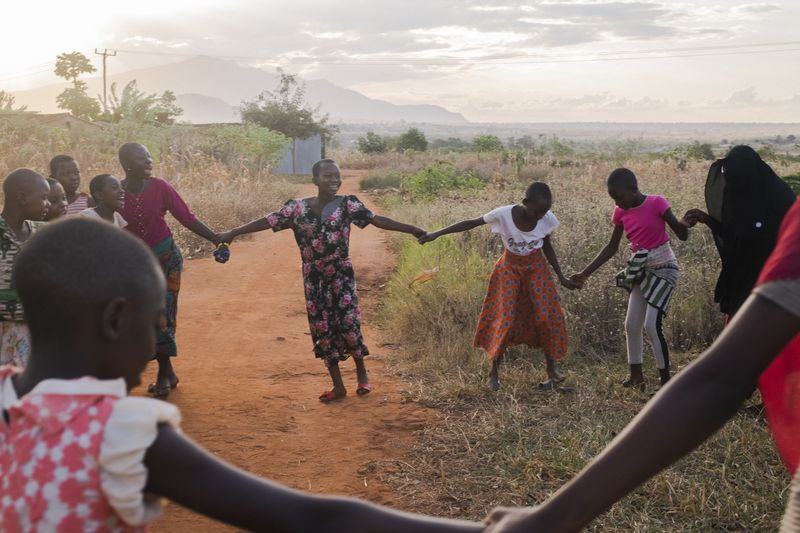
Many young women feel isolated in their experiences and believe they are the only ones facing particular challenges. But when they can talk to others, they find connection and support. That is why we at BRAC place such strong emphasis on safe spaces and mentorship. An important part of our approach is also making the broader environment more supportive. Through the community dialogues we are establishing, we are working to ensure the world around them becomes more enabling for women.
Q: Women’s participation in livelihoods is relatively high in many African contexts compared to other parts of the Global South. Yet, significant gender gaps persist in access to health, education, and finance. How is BRAC working to help close these gaps?
Anne: In our programmes, we are encouraging women to pursue their dreams – to be aspirational and not to feel limited by their circumstances. In other words, we aim to support women to live lives that are not just about survival. That is why we invest so much in the financial literacy component of their journey. We help young women gain a better understanding of how to manage savings, make budgets, draft business plans, and plan their investments.
When women open their businesses, that is where the change – and the magic – really happens. I feel that magic when a woman who has graduated from our programmes tells me she has opened a shop that now provides income for her family, ensuring food, shelter, and the ability to send her children to school. These moments of pride and joy cannot be quantified – that’s the fundamental transformation.
Q: What sets BRAC’s approach apart from other organisations working to empower girls and women and improve their lives?
Anne: I remember someone asking me why BRAC implements directly when we could simply work through partners. For me, the answer is clear: having our dedicated frontline staff working directly with adolescent girls and young women – living in and staying connected to the same communities – allows us to build trust and maintain it over time. And for marginalised people, trust is absolutely critical.
Another key feature is our significant investment in each individual, staying with them over many years. It is an extensive journey we take with each girl, beginning when she is as young as 12 and continuing until she exits our programmes several years later. After that, she can transition into microfinance support, enabling her to explore various livelihood options fully.
Q: Across Africa, you are implementing the ‘Accelerating Impact for Young Women’ programme, known as AIM. How do BRAC and the AIM programme invest in future generations and help advance gender equality?
Anne: In our work with the AIM programme, we start with very young girls and begin with social empowerment – something that may look basic from the outside, but is incredibly impactful. Many of our participants are understandably eager to reach the livelihood component as quickly as possible, but social empowerment is absolutely critical to their success in livelihoods. That is where agency is awakened.
Poverty is more than a lack of income. If my voice is not heard, if I do not have the space to participate – that is poverty, and it is crippling.
Anne Mutta joined BRAC International as the Regional Director for Africa in February 2025. She brings over two decades of experience in the development sector and has led multi-country programmes across Africa and Asia. She has spent significant time designing and implementing inclusive development solutions that elevate women across diverse sectors.
With the 16 Days of Activism coming to a close, we sat with Anne to better understand how women being equally involved in decision-making results in more cohesive and peaceful communities.
Interview taken by Christian Jepsen, Senior Manager, AIM Communications
Photos: Sarker Protick, Tanzania, 2023