Tiina Pasanen discusses key learnings from a study of government-led Graduation programmes in Ethiopia, Senegal, Kenya and Paraguay. Graduation combines different types of components (such as asset transfers and coaching) to support participants’ self-reliance and livelihoods in a holistic manner so that the poorest can “graduate” from poverty.
Scaling up interventions through government systems can be – and usually is – challenging, but it’s necessary if we want to make lasting improvements in the lives of millions of people, rather than thousands. This is our starting point at BRAC when partnering with governments to scale up the Graduation approach.
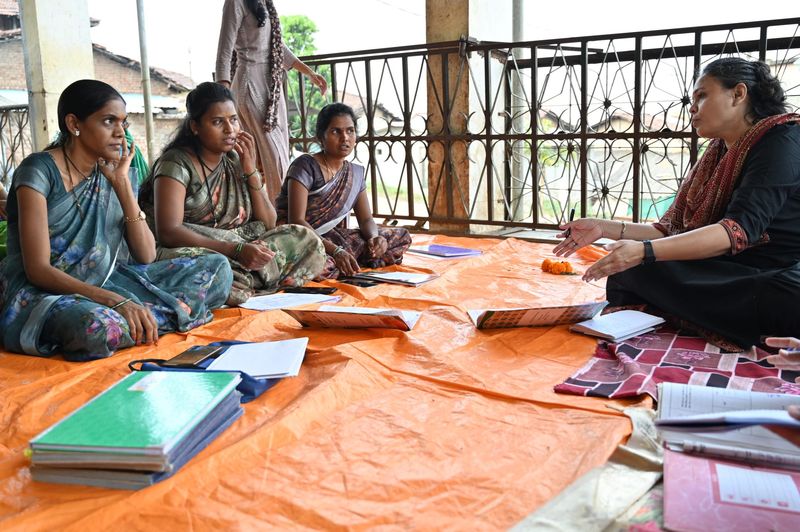
As our partner governments are designing and implementing the first phases of their new high-quality Graduation programmes, we wanted to learn from those who have taken this path before us. Because – and this is no revelation to anyone working in the sector – having a strong, technically ‘correct’ pilot doesn’t guarantee it will ever be scaled up. Far from it. It’s the other stuff – elections, funding, coordination across agencies, to name a few – that matters, too.
So, how did other government-led Graduation programmes manage to expand? What needed to be in place? What did they struggle with? We looked at four programmes: Urban Productive Safety Net and Jobs Project in Ethiopia, Yokk Koom Koom in Senegal, Tenondera in Paraguay, and Economic Inclusion Programme in Kenya. The first three have successfully scaled up, and EIP is in the process of doing so.
This is what we learned:
- Administrative capacity is a persistent bottleneck. We tend to put a lot of effort and time into a technical design – and often for a reason. But while all four case study programmes faced some technical challenges, especially in delivering the coaching component, it is the administrative capacities and systems that remain a key hurdle to effective programming at scale.
Government-led Graduation programmes often utilise mechanisms and processes initially developed for national cash transfer programmes such as social registries for targeting, grievance mechanisms, (digital) payment systems etc. But even when this is the case, Graduation programmes demand significantly greater cross-agency coordination, specialised human resources, and case management capacity.
For example, while Ethiopia had previous experience in implementing large-scale programmes, it became clear during the expansion design that some cities had limited procurement, HR and M&E capacity. As a solution, World Bank-funds were not released before certain criteria were verifiably met at each location. As the programme is implemented in collaboration with several agencies in over 80 cities / towns, coordination is an ongoing challenge – as it is in all programmes studied. To support this, Ethiopia set up steering, technical and coordination committees at federal, regional and city level.
- Pilot phases are essential learning laboratories, not just testing grounds. Programmes studied demonstrated that even technically sound designs require intentional adaptation periods. The most successful programmes treated first phases as opportunities for systematic course correction rather than simple proof-of-concept exercises. Critical adjustments – from coaching delivery models to payment systems – emerged through operational learning and were incorporated into expansion designs.
While impact evaluations often get more attention, and are used to justify a programme’s expansion, it wasthe learning and process evaluations that identified capacity and coordination issues that needed to be addressed in the scaling up process.
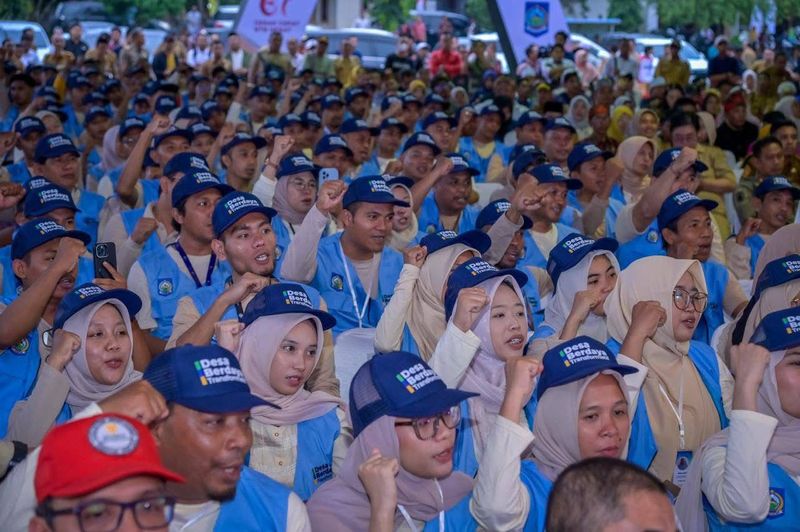
- NGOs can support governments to implement Graduation, but need to rethink how programmes are designed and delivered to operate efficiently within government systems. In three out of four programmes studied, NGOs played a significant role in supporting governments, typically providing technical expertise but often also implementing field-level activities. Their knowledge of government systems influenced their ability to support the government effectively. In Kenya, the NGOs were experts in Graduation implementation, but had relatively limited capacity/knowledge of how to effectively integrate Graduation into government systems. In Paraguay, on the other hand, the NGO had very close relationships and deep knowledge of the government systems, which helped the process.
- Political support must be broad-based and institutionalised to survive transitions in administration. The programmes in Senegal and Paraguay weathered changes in government, demonstrating the importance of embedding the Graduation approach in national poverty reduction strategies and building relationships across multiple levels of government (including middle management), rather than relying on individual champions. What is needed sometimes, is rebranding and tweaking the programme design. For example, in 2024 the new government in Paraguay officially adopted a new version of the programme through Ministerial Resolution without making essential changes to it. This common Latin American practice serves as an opportunity to reinforce both the ownership and sustainability of the programme.
By no means are all these insights brand new for those working on scaling. For us at BRAC, the important question is: How will these learnings inform our work with governments?
We have ideas: For example, in South Africa, we are piloting an open-source platform to support the delivery of coaching at scale. We are also setting up ongoing process evaluations to gather evidence and insights to inform programming in real-time across countries. But beyond all the ‘technical’ solutions we may come up with, we also need to remember to be – as the programmes studied were – intentional and open in identifying and sharing our challenges, not merely things that worked.
Tiina Pasanen is a MEL and Research Advisor for BRAC's Ultra-Poor Graduation Initiative.
To read the original blog, please visit the LSE Blogs.