This International Women’s Day, governments and funders face a clear choice. Investing in women is not charity or a peripheral goal—it is one of the most effective development strategies available.
It is estimated that closing the gender gap will add nearly USD 7 trillion to the global economy. This boost is not a soft social benefit. It rivals the annual output of major economies such as Japan and India. In purely economic terms, gender equality is one of the largest untapped growth opportunities of our time.
Despite this, the World Economic Forum estimates that it will take us over a century, or 123 years, to close the persisting gender gap.
Around the world, the evidence is undeniable: when women have equal power in decision-making, families prosper, communities mobilise, systems become more accountable, and the grip of poverty weakens. That is transformational change.
I first witnessed this transformative power in 2005, in rural Rajasthan in north-western India, as part of University of Minnesota’s Development Studies programme in partnership with the University of Rajasthan.
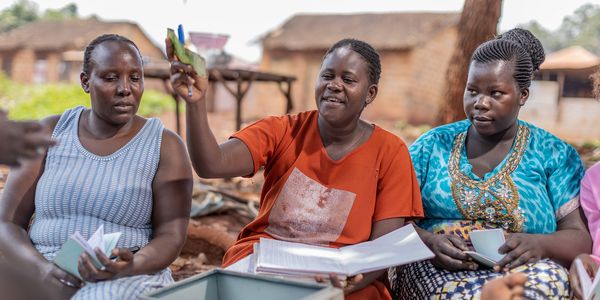
During my time there, I worked with a local microfinance organisation. I met women who had never completed high school running their own businesses. They kept meticulous financial records, contributed to savings groups, and in time, created financial safety nets that protected themselves and their households from unpredictable shocks. When I asked, “Who decides what you do with your profits?” several women responded, “We do!” They were no longer one health emergency or unexpected expense away from disaster. Their capacity to plan, to save, and to anticipate risk reshaped the stability of entire households.
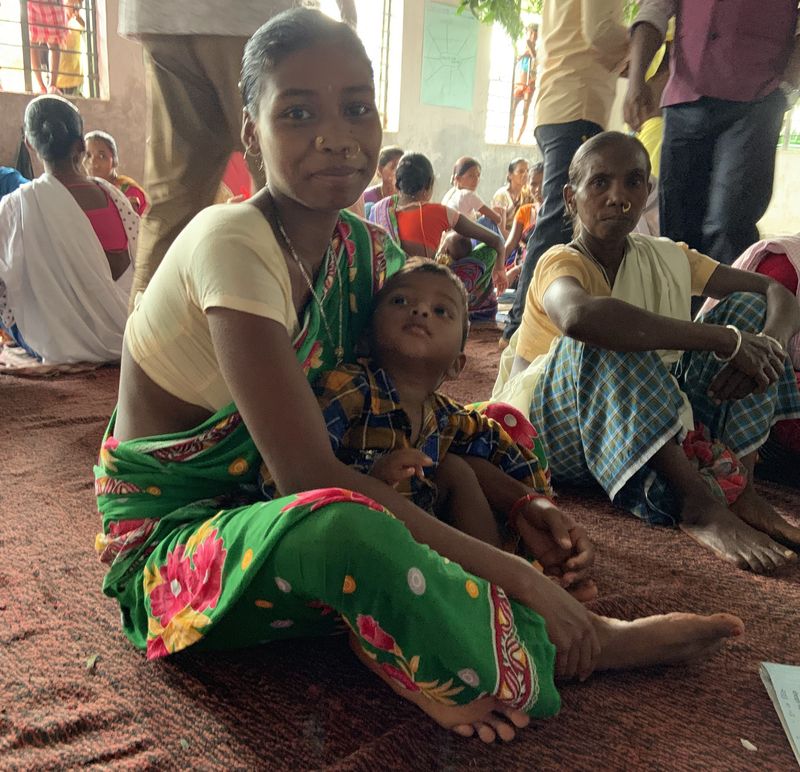
A women’s savings group meeting supported by Trickle Up in Jharkhand, India, 2019
I saw firsthand that when a woman gains economic opportunity, the effects reverberate far beyond her individual circumstance. Household members pay attention. Community leaders pay attention. It is an intergenerational and societal shift.
Despite such compelling evidence, the persisting gender gap compels us to rethink how we invest in women.
Firstly, we must foster the conditions in which women can exercise choice, voice, and agency. This includes not only access to finance and education but also the social support that allows them to take risks without fear of reprisal, the confidence to pursue opportunities, and the networks that sustain them through moments of doubt or opposition. Feminism rooted in Global South realities reminds us that solidarity must begin with listening — that women in any given context are the authors of their own liberation, not the beneficiaries of frameworks imported from elsewhere.
Across cultures and generations, women have been conditioned to prioritise the needs of others before their own, yet when they are able to make decisions and direct resources, the effects are tangible and measurable: women are healthier, children are better nourished and educated, and communities become more resilient. Data shows that when women earn, they reinvest up to 90% back into their families, compared to only 30 to 40% from men.
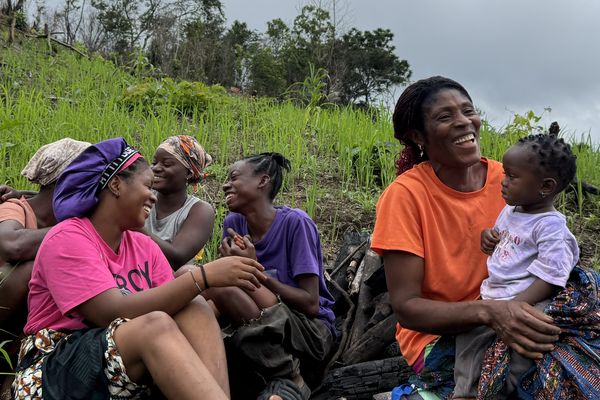
I have witnessed this ripple effect in the women’s savings group meetings I’ve attended in Guatemala, India, Mexico, Ethiopia, Kenya, and Burkina Faso. In these gatherings, women frequently arrive with their young children in tow. What may appear to be a simple logistical choice is, in fact, deeply symbolic. In bringing their children into these spaces, women are not only passing on basic financial literacy; they are modelling confidence, collective action, and decision-making power to their children.
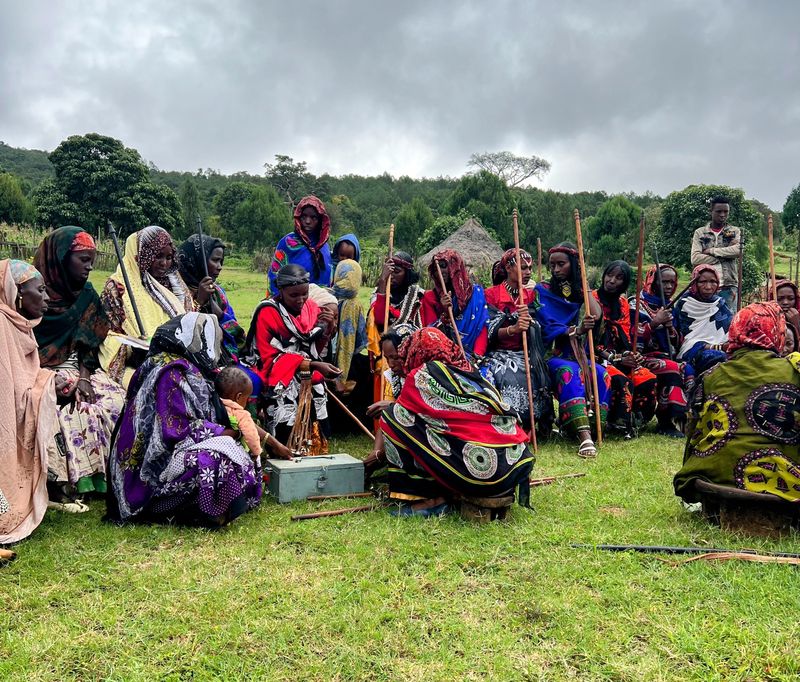
A women’s savings group meeting supported by BOMA in the Borena region, Ethiopia, 2024.
As children watch their mothers manage finances, negotiate, advocate for their needs, and support one another, they absorb a new understanding of what agency looks like. They witness leadership exercised at the grassroots level and see women shaping their own economic trajectories. This exposure represents a subtle but profound shift away from a narrow focus on day-to-day survival toward aspiration, planning, and long-term security.
Secondly, as we invest in the future of development, we must recognise that data is not neutral—it reflects whose lives count and whose voices are heard. On International Women’s Day, when we call for equity and systems change, data becomes a powerful tool to expose gaps and drive accountability. Governments and implementing agencies must act on what the evidence shows: communities facing low literacy, limited connectivity, or fragile safety nets are too often excluded by one-size-fits-all solutions. Programmes that rely on digital access without addressing gender gaps in phone ownership, digital literacy or unpaid care burdens, leave women behind from the start. Data makes clear that interventions—from financial products to social protection—must be designed with women’s realities at the center.
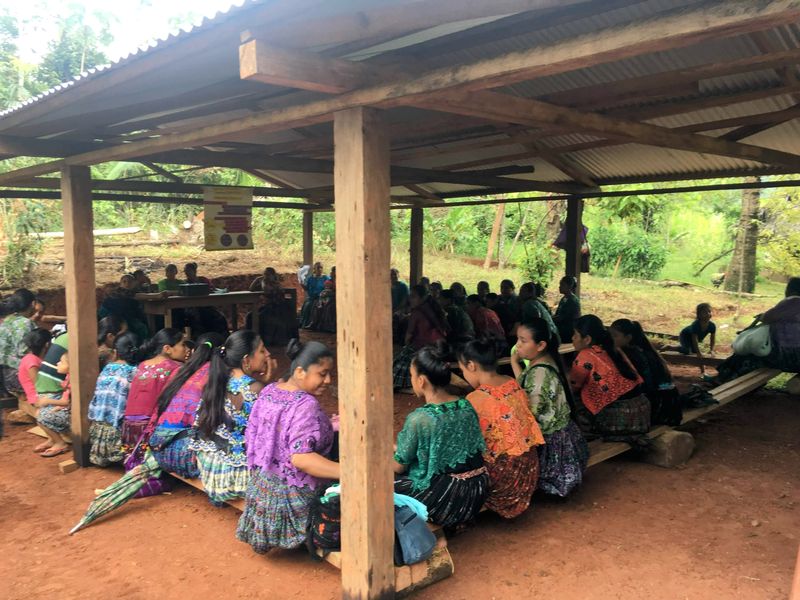
A women’s savings group meeting supported by Trickle Up, Guatemala, 2019.
And thirdly, ground realities show that there is a persisting power imbalance in the way programmes are funded and designed. We need patient investment, rigorous attention to evidence, and a willingness to engage with lived realities and complexities. It also requires an intentional engagement with men, families, and community leaders to build understanding and support for the choices women make. We need to embrace a systems-thinking approach and deepen partnerships to achieve a multiplier effect.
Take for example the case of diarrhoea in Bangladesh, one of the biggest reasons behind child mortality back in 1980. A simple solution existed – a rehydration mixture of water, salt, and sugar, hailed by medical journal the Lancet as “potentially the most important medical advance of the 20th century”. There was a problem, though – the ingredients had to be mixed with care and precision, and Bangladesh at that time had very few formally trained doctors or nurses, particularly in rural areas. The World Health Organization said it was impossible to teach parents in rural areas to safely mix the solution. BRAC refused to accept it and spent the next 10 years proving just as much. Anthropologists helped refine language when we found that the many terms used for diarrhoea across the country were creating confusion. Doctors reinforced the science when some recruited community health workers did not believe the solution worked. Religious and local leaders addressed social norms when fears spread that trainers were family planning workers in disguise.
Finally, through the decade-long oral therapy extension programme, BRAC equipped 13 million mothers with the knowledge to prepare a lifesaving solution for their children. The campaign demonstrates the power of collaborative partnerships in catalysing large-scale change, and designing programmes that meet the needs of last-mile communities. This requires strong feedback loops and follow-ups, even when the feedback is not what we want to hear.
The ripple effect of lasting change
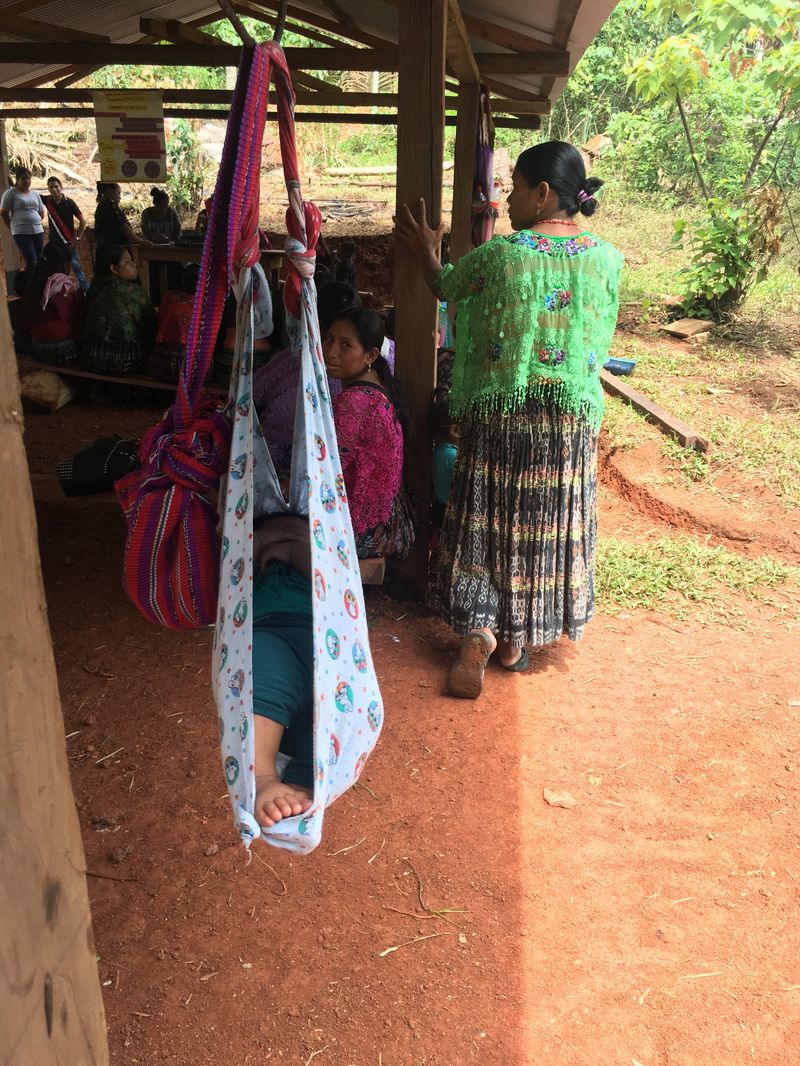
A baby naps during a savings group meeting supported by Trickle Up in Guatemala, 2019.
Women’s economic empowerment delivers measurable gains in poverty reduction, food security, health, and economic growth. Over the last five decades, BRAC’s work has proven impact at scale with quality. Young women and girls in our clubs gain life and business skills, while mothers lift their families out of extreme poverty through asset transfers, cash support, and intensive training — all approaches proven to build long-term resilience. Investing in women is not a social add-on—it is a high-return development strategy. To realise its full impact, policies and programmes must be designed around evidence, reach the hardest-to-reach, and use data to continuously improve the quality and equity of services.
Anjum Khalidi joined BRAC International as Director, Strategic Partnerships and Fundraising in January 2026. She brings over two decades of experience in international development, resource mobilisation, and strategic partnerships across private, philanthropic, and multilateral sectors.